Available nationwide for in person, virtual and over the phone appointments now! Contact us



The Vital Role of Interpreters in IEP and Special Education Meetings: Empowering Parents Through Clear Communication
Discover how interpreters play a crucial role in IEP and special education meetings by helping parents understand their child’s education plan, express concerns, and actively participate in decision making. Learn how language support empowers families and strengthens collaboration with educators.
Kantarose Woolley
4/16/20262 min read
A Voice Beyond Language
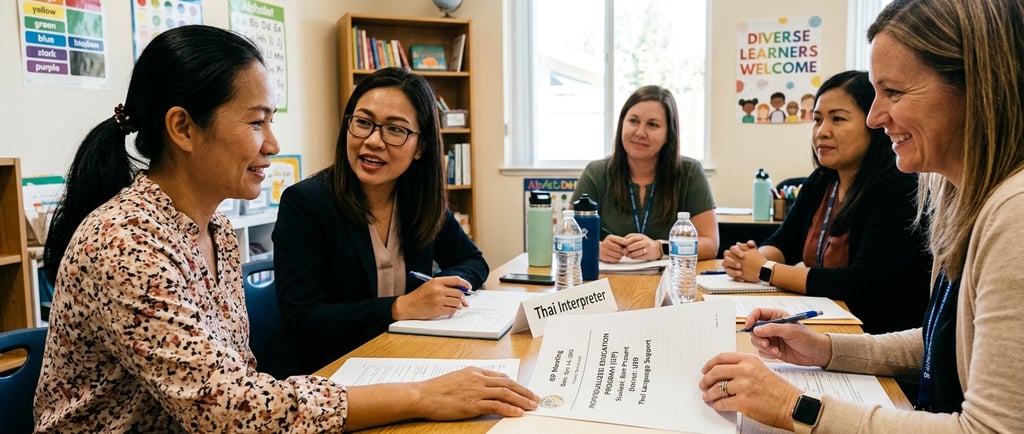
Interpreters play a quiet but deeply meaningful role in IEP (Individualized Education Program) and special education meetings. While they are often seen simply as language bridges, their impact reaches much further into trust building, advocacy, and ensuring that every parent has a genuine voice in their child’s education.
Why These Meetings Matter to Families
Having attended these meetings as an interpreter, I have seen firsthand how critical this role can be. For many families, these meetings are not just about paperwork or academic plans. They are about their child’s future, their struggles, and their hopes. When language is a barrier, that entire process can feel overwhelming, isolating, and sometimes even intimidating. That is where the interpreter becomes essential.
Ensuring Clear and Accurate Communication
At the most basic level, interpreters ensure that information is clearly communicated. IEP meetings often involve technical language, educational terminology, and detailed discussions about assessments, goals, and services. Without accurate interpretation, parents may miss key details or misunderstand important decisions. Interpreting allows them to fully grasp what is being discussed, what services their child will receive, how progress will be measured, and what support systems are in place.
Creating Space for Parent Participation
But beyond translating words, interpreters help create space for parents to participate meaningfully. One of the most important parts of an IEP meeting is parental input. Parents know their child in ways no one else does. They see behaviors at home, notice emotional patterns, and understand their child’s strengths, fears, and needs in a deeply personal way. When I interpret, I make sure that these insights are not lost. I help parents express their observations, concerns, and questions so they become part of the decision making process, not just passive listeners.
Supporting Parents Emotionally
There is also an emotional layer to this work. Many parents come into these meetings feeling anxious or unsure. They may worry about their child being labeled, falling behind, or not receiving enough support. As an interpreter, I often witness the moment when understanding replaces fear. When parents hear, in their own language, how teachers and specialists are working to support their child, there is a visible sense of relief. They begin to feel included, respected, and reassured.
Building Trust Across Cultures
Trust is another key element. Interpreters often become a bridge not only between languages, but between cultures and expectations. Some families may come from backgrounds where questioning educators feels uncomfortable, or where special education is not widely understood. By facilitating open and respectful communication, interpreters help build trust between families and school staff. This trust is essential for effective collaboration.
Balancing Accuracy and Compassion
It is also important to recognize that interpreters must remain accurate and neutral while still being compassionate. The goal is not to speak for parents or educators, but to ensure that both sides are heard clearly and respectfully. That balance requires skill, cultural awareness, and sensitivity to the emotions in the room.
Advancing Equity in Education
Ultimately, interpreters help make the IEP process more equitable. Every parent deserves to understand what is happening with their child’s education and to have a say in shaping it. Language should never be a barrier to that right.
More Than Interpretation: Empowerment
From my experience, being part of these meetings is not just about interpretation. It is about empowerment. It is about helping parents find their voice, ensuring their concerns are acknowledged, and supporting a shared goal of giving every child the opportunity to succeed.
Quick Links
Get in touch
Phone
© 2026. All rights reserved.